


 671 / 762

Chapter 15: Chi-Square Tests
671
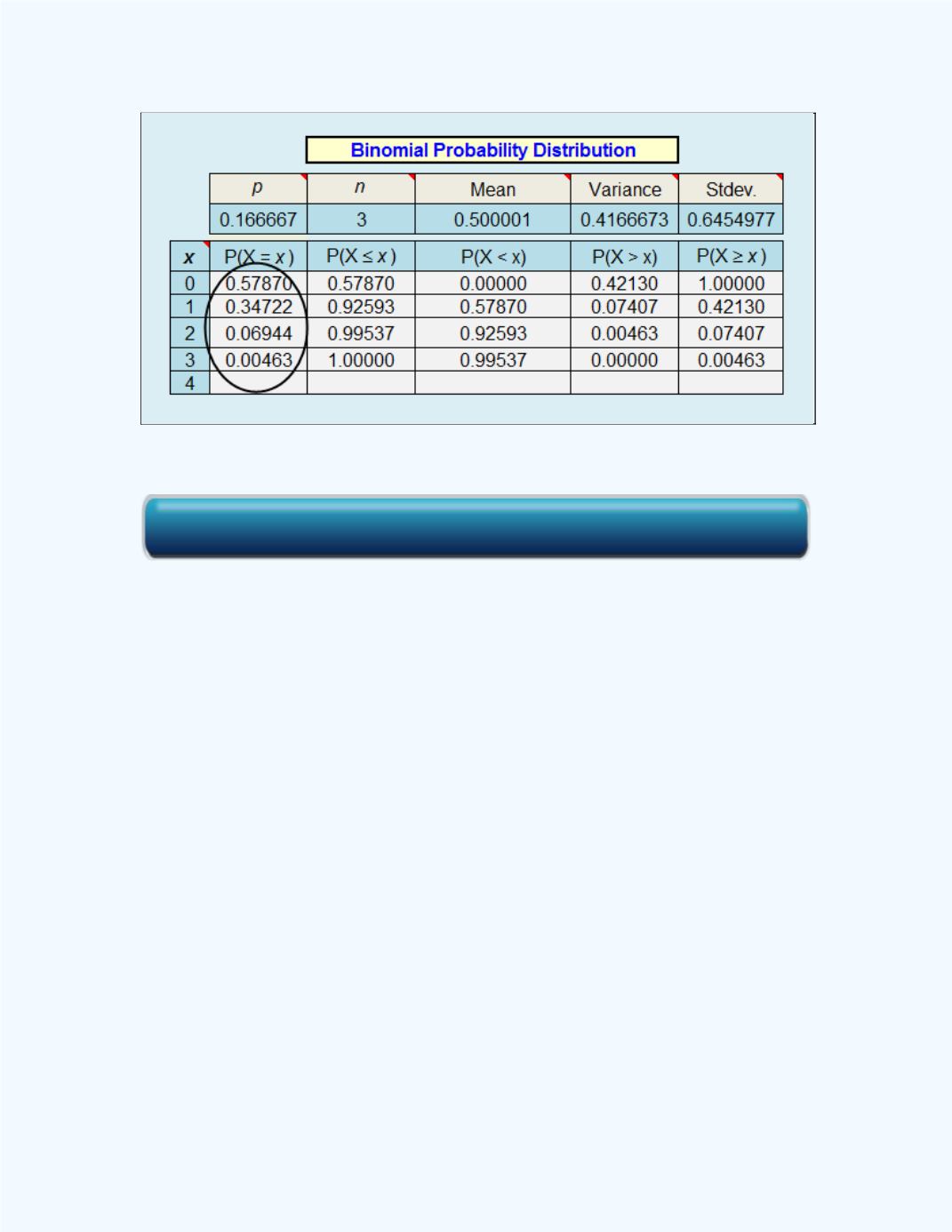
Figure 15-9:
Binomial Probabilities for
Example 15.3
So if we let
X
= number of sixes rolled, then
P
(
X
= 0) = 0.5787,
P
(
X
= 1) = 0.3472,
P
(
X
= 2) = 0.0694, and
P
(
X
= 3) = 0.0046.
Multiplying 200 by these probabilities will give the expected number of
sixes rolled. Thus,
E
(
X
= 0) = 200
0.5787 = 115.74
E
(
X
= 1) = 200
0.3472 = 69.44
E
(
X
= 2) = 200
0.0694 = 13.88
E
(
X
= 3) = 200
0.0046 = 0.92
Table 15-2
summarizes the information so far.
Click here for the Binomial Probability Distribution Workbook