


 109 / 762

Chapter 3: Measures of Variability
109
Definition: Mean Absolute Deviation
The mean absolute deviation (
) for a data set is the average of the
absolute deviations from the mean of the data set.
That is, the deviations of the data values from the mean are first computed,
then absolute (positive) values for these deviations are obtained, and then the
average of these positive values is calculated.
Generally, if there are
data values in the sample, then the
for the
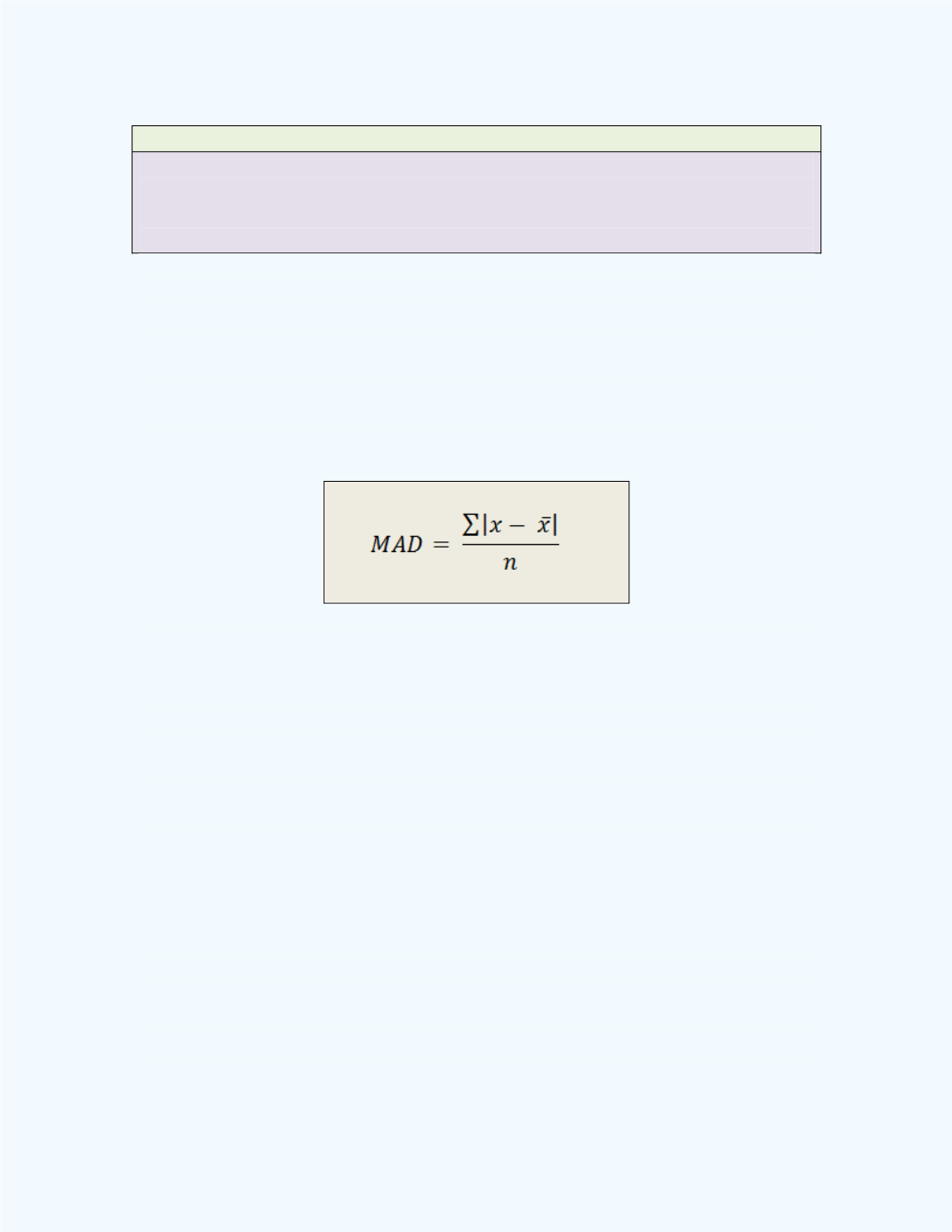
sample is defined as the average of the absolute deviations from the mean
and is given by
The formula says that you subtract the sample mean from each data value
and take the absolute value of the result. Next you add up these values and
divide by the sample size.
Example 3-6:
What is the
for the following sample values?
3 8 6 12 0 -4 10
Solution:
First of all, the sample mean = (3 + 8 + 6 + … + 10)/7 = 5.
Next, we can construct a table to aid with the computations.
Table 3-1
shows the actual data values, the values for the deviations from the sample
mean, and the absolute values for these deviations.