


 80 / 762

80
Chapter 2: Measures of Central Tendency
Definition: Mode
The mode of a set of numerical (data) values is the most frequently
occurring value in the data set.
Notes:
When computing the value of the mode, the data values can be either
population values or sample values.
Hence we can compute the population mode or the sample mode.
Both population and sample data values are assumed to be finite.
Unlike the mean and median, the mode is not necessarily a unique value for
a data set. Because of this we can have several scenarios for the mode in a
data set. The following are the possibilities:
no mode, unimodal, bimodal,
and multimodal.
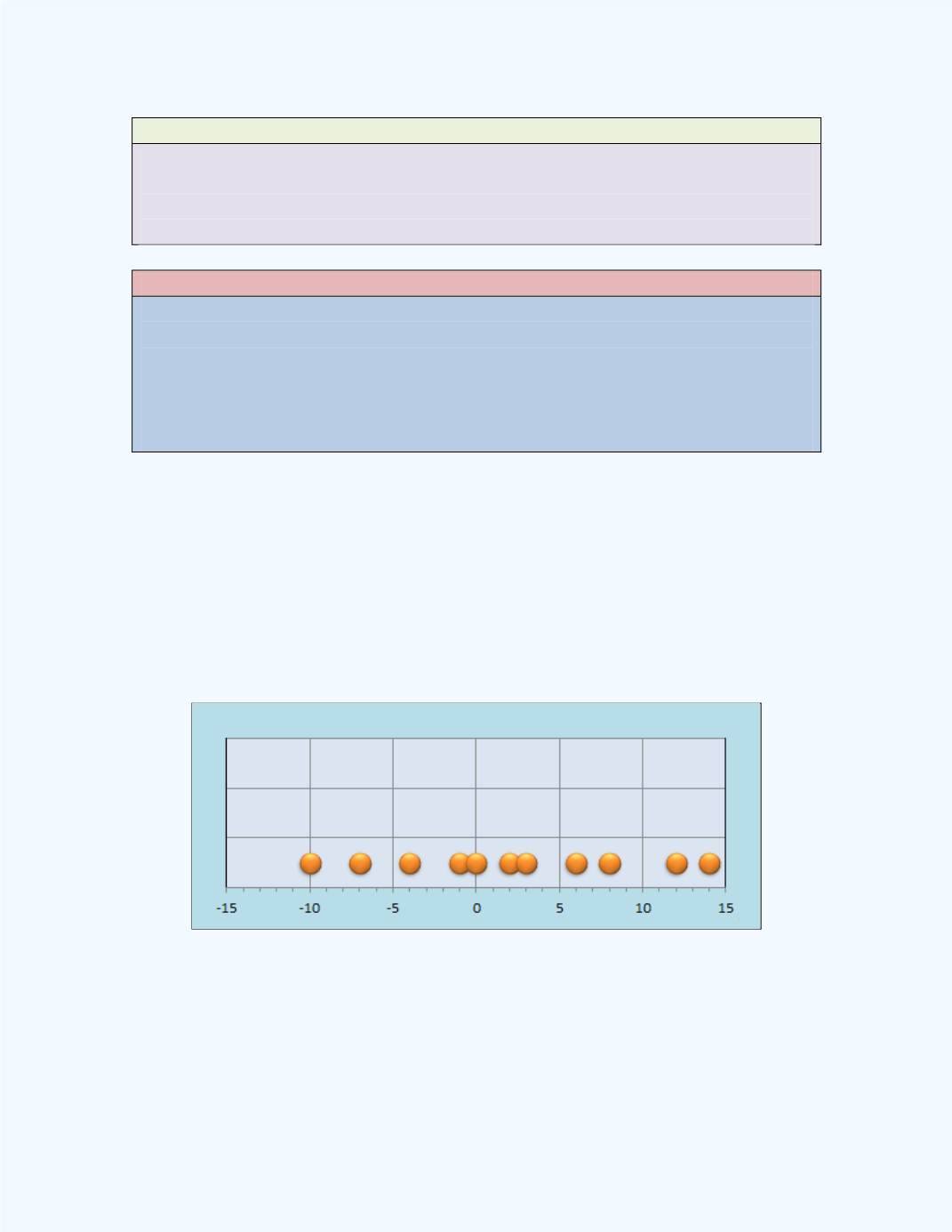
Figure 2-13
illustrates a case when a data set has no mode. Observe that
the frequency count for each value is 1. That is, there is no value in the data
set with the highest frequency.
Figure 2-13:
Illustration with no mode
Figure 2-14
illustrates another case when a data set has no mode. Observe
that the frequency count for each value is 3. That is, there is no value in the
data set with the highest frequency.